

Introduction
Sometimes one unexpected moment stays with us far longer than we expect.
Not because the moment itself was extraordinary.
But because of the quiet question that follows.
“What does this say about me?”
Many of us have experienced some version of that question.
It may appear after trying something new, feeling something unexpected, or realizing that our experience doesn’t look exactly like someone else’s.
Before long, we’re no longer thinking about the experience itself.
We’re trying to decide what kind of person it makes us.
That can happen in many areas of life—including sexual wellness.
One fantasy.
One unexpected feeling.
One experience with a vibrator.
One moment of curiosity.
None of these automatically tells the whole story of who you are.
Before deciding what a single experience means, it may help to ask a different question instead:
“What might this experience be showing me?”
That small shift creates space for understanding before self-definition.
Quick Take
One experience can teach you something about yourself without defining your whole identity.
Meaningful discoveries often begin with curiosity rather than certainty.
Giving yourself time to notice patterns usually leads to a more honest understanding than rushing toward a label after a single moment.
Quick Answer
When something feels emotionally important, our minds naturally search for an explanation.
We want to understand what happened—and what it says about us.
That instinct isn’t a weakness.
It’s part of how human beings make sense of their experiences.
The challenge is that one experience rarely contains enough information to define an entire identity.
It may be meaningful.
It may deserve reflection.
It may even become part of understanding yourself more deeply over time.
But understanding usually grows through patterns, context, and repeated experiences—not a single moment.
Replacing immediate conclusions with thoughtful curiosity doesn’t delay self-understanding.
It often makes that understanding more accurate and more compassionate.
Why Our Minds Want Quick Answers
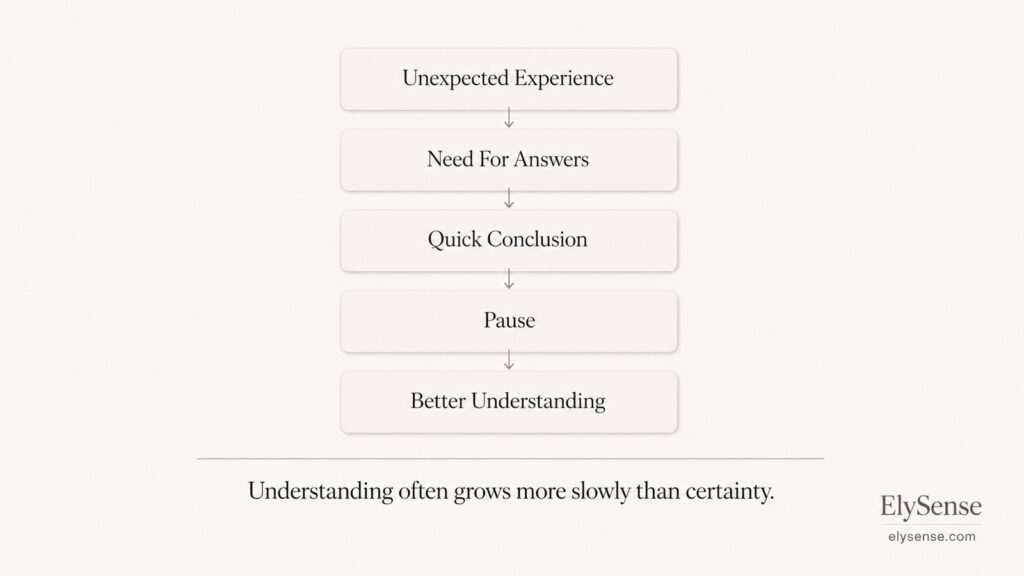
Human beings are natural pattern seekers.
We notice connections.
We look for meaning.
We try to organize new experiences into stories that help us understand ourselves and the world around us.
That process is usually helpful.
Without it, learning would be much more difficult.
The problem isn’t that we search for meaning.
The problem is that we sometimes search for certainty faster than understanding can grow.
A surprising experience can feel so emotionally significant that our minds immediately begin asking questions like:
“Does this mean I’m different?”
“Has this changed who I am?”
“Have I discovered something important about myself?”
Sometimes the answer may eventually be yes.
Sometimes the answer may be more complicated.
Either way, a single moment rarely provides enough information on its own.
Understanding yourself is usually less like solving a puzzle and more like getting to know someone over time.
That someone happens to be you.
One Experience Isn’t The Whole Story
Imagine reading only one page of a novel and deciding you already know the ending.
Most of us would recognize that as impossible.
Yet we often do something surprisingly similar with ourselves.
One unexpected attraction.
One fantasy.
One emotional reaction.
One enjoyable experience.
One uncomfortable feeling.
Suddenly, it can seem as though everything must fit around that single event.
Real life is rarely that simple.
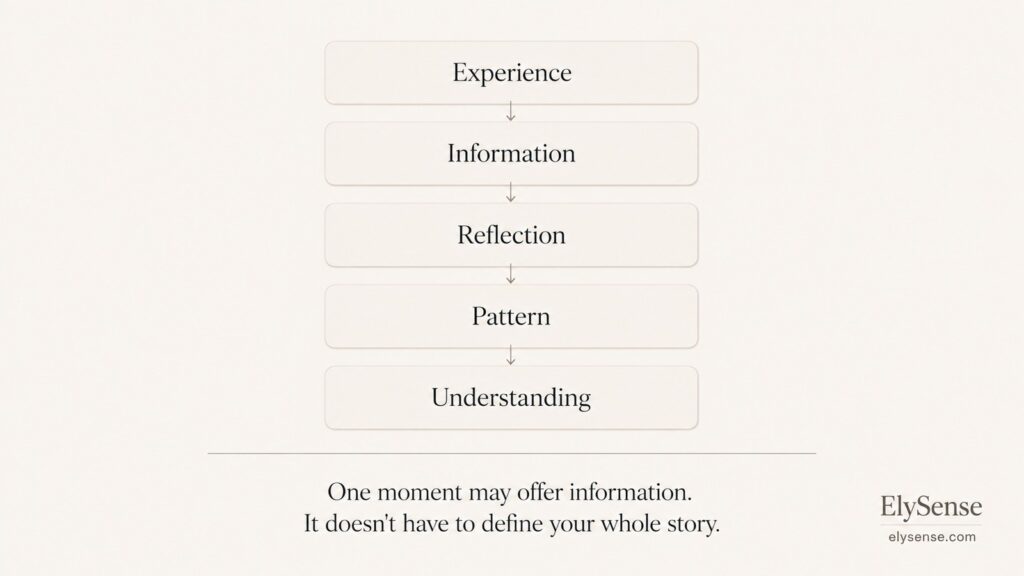
Experiences provide information.
They invite questions.
They sometimes reveal patterns worth paying attention to.
But they don’t automatically become complete explanations of who we are.
Giving yourself permission to gather more understanding before reaching a conclusion isn’t avoiding the truth.
It’s respecting how complex human identity really is.
Information Isn’t The Same As Identity
As we move through life, we constantly learn new things about ourselves.
Some discoveries feel exciting.
Others feel confusing or even unsettling.
It’s natural to wonder what those discoveries mean.
The important question is how much meaning we give them.
One experience can certainly be meaningful.
It may reveal a preference you hadn’t noticed before.
It may challenge an assumption you’ve always believed about yourself.
It may encourage you to explore a part of yourself with greater honesty.
All of those possibilities are real.
But meaningful information isn’t automatically a complete identity.
Think about how we understand other people.
We rarely believe we know someone’s entire character after seeing one decision, one conversation, or one emotional reaction.
Instead, we gradually understand them through consistency, context, and time.
The same patience is worth offering yourself.
One experience can become part of your story without becoming the entire story.
Why Do I Feel Guilty About Using A Vibrator?
When Curiosity Is More Helpful Than Labels
When something surprises us, labels often feel comforting.
They seem to offer certainty.
Instead of living with unanswered questions, we can tell ourselves,
“Now I know who I am.”
Sometimes those labels eventually fit.
Sometimes they don’t.
The difficulty is that labels often arrive long before understanding has had a chance to grow.
Curiosity asks different questions.
Instead of,
“What am I?”
it asks,
“What am I learning?”
Instead of,
“Does this define me?”
it asks,
“Is this part of a larger pattern, or simply one meaningful experience?”
Curiosity doesn’t prevent self-discovery.
It protects it from becoming rushed.
Giving yourself permission to stay curious isn’t avoiding the truth.
It’s allowing the truth enough time to become clear.
When Patterns Begin To Matter
None of this means that repeated experiences should be ignored.
Sometimes a pattern continues appearing over months or years.
Sometimes certain feelings remain meaningful across different situations.
Sometimes new experiences consistently point in the same direction.
When that happens, those patterns may become valuable information for understanding yourself more deeply.
The difference is that the conclusion grows from many experiences rather than being forced from one.
Understanding your identity is often less about finding one decisive moment and more about noticing what remains true over time.
That process looks different for every person.
There is no deadline for understanding yourself.
There is no prize for reaching certainty first.
When It May Help To Talk With Someone
Questions about identity can sometimes feel overwhelming, especially when they create significant anxiety, fear, or distress.
If you find yourself feeling trapped by intrusive thoughts, intense shame, or persistent confusion that affects your daily life, it may be helpful to speak with a qualified mental health professional.
Support isn’t about giving someone else the authority to define who you are.
It’s about creating a safe space where you can explore important questions without carrying them alone.
Sometimes the most meaningful understanding develops through conversation rather than isolation.
ElySense Perspective
You don’t have to ignore new discoveries about yourself.
You also don’t have to let one moment decide your whole story.
Understanding yourself is usually something that unfolds over time—not something decided by a single experience.
Continue Your Journey
Still wondering how to understand your own experience?
→ How Do I Know What Actually Feels Good?
Trying to understand difficult emotions?
→ Why Do I Feel Guilty About Using A Vibrator?
Wondering whether you’re using your vibrator correctly?
→ Am I Using My Vibrator Wrong?
Frequently Asked Questions
Does one sexual experience define who I am?
Not by itself. A single experience may offer meaningful information, but understanding identity usually develops through patterns, context, and time rather than one moment alone.
Why do I feel like I need an answer immediately?
When something feels emotionally important, it’s natural to look for certainty. Many people find that allowing themselves time to reflect leads to a more thoughtful understanding than rushing toward a conclusion.
Can one fantasy or preference change my identity?
A fantasy, preference, or experience may become part of learning about yourself, but it doesn’t automatically define your entire identity. Understanding often develops gradually.
Is it okay not to know yet?
Yes. Self-understanding doesn’t always happen all at once. Giving yourself permission to remain curious can be a healthy part of that process.
When should I pay attention to patterns?
If certain experiences, feelings, or preferences remain meaningful over time and across different situations, they may provide valuable insight into understanding yourself more deeply.
What if these questions are causing significant distress?
If uncertainty about your identity is creating ongoing anxiety, shame, or interfering with daily life, talking with a qualified mental health professional can provide helpful support.
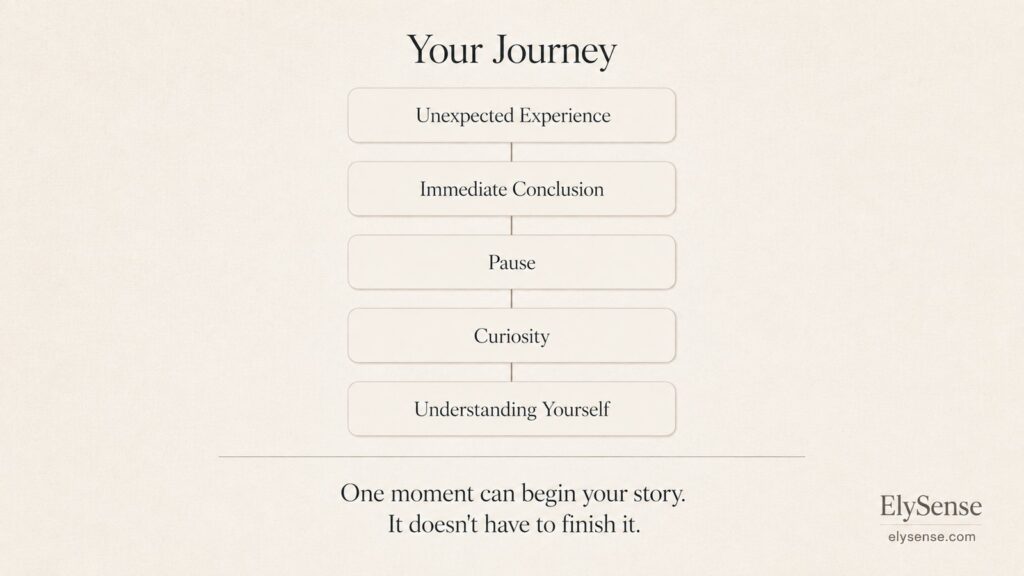
One moment can begin your story.
It doesn’t have to finish it.