

You watched a few tutorials. You followed the suggestions. You changed the position, tried another setting, and waited for the experience everyone else seemed to describe.
But nothing happened.
Or maybe something happened—but it felt too intense, too weak, distracting, or simply not very enjoyable.
When the experience does not match the instructions, it is easy to assume the problem is technique.
You may start wondering:
Am I doing something wrong?
Quick Take
Probably not.
Many people do not immediately know what kind of stimulation feels comfortable or enjoyable to them. A tutorial can give you somewhere to begin, but it cannot tell you exactly how your body will respond.
You may not be failing.
You may simply still be learning.
Quick Answer
There usually is not one single “correct” way to use a vibrator.
Different bodies respond to different kinds of pressure, placement, rhythm, intensity, and vibration. Your experience can also change depending on how relaxed, tired, distracted, private, or emotionally comfortable you feel.
If something is not working yet, it does not automatically mean you are using the vibrator incorrectly.
It may mean that you are still discovering what your body responds to.
Why So Many People Think They Are Doing It Wrong
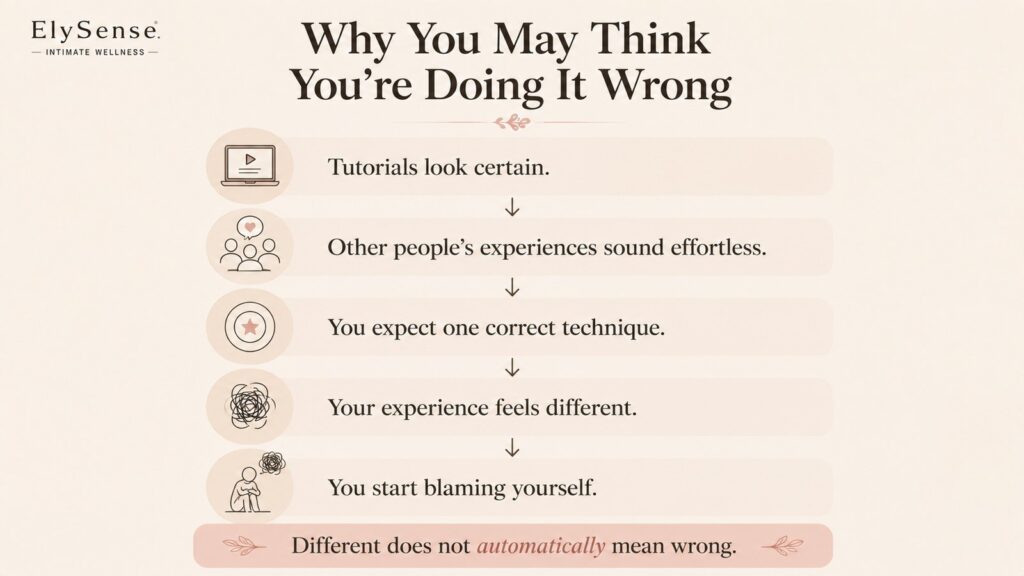
Tutorials Can Look More Certain Than Real Life
Online instructions often make the process appear simple:
Choose a setting.
Place the vibrator in a certain position.
Wait for the expected result.
That kind of advice can be useful as a starting point. But real bodies do not always follow a predictable sequence.
A method that feels wonderful to one person may feel overwhelming, uninteresting, or awkward to someone else.
The tutorial is not necessarily wrong.
Your body is not wrong either.
The information may simply be incomplete because it cannot account for every person’s preferences.
Comparing Yourself With Other People
People often share their most dramatic experiences online.
They may describe immediate pleasure, powerful orgasms, or finally finding “the perfect technique.”
Those stories can make exploration look effortless.
When your own experience is quieter or more confusing, you may think:
Everyone else seems to understand this. Why don’t I?
But you are usually comparing your private learning process with someone else’s finished story.
You do not see:
- how many things they tried first;
- what did not work for them;
- how long it took to understand their preferences;
- whether their experience changes from one day to another.
A different experience does not mean you are less capable of pleasure.
We Assume There Must Be One Correct Technique
When something feels different from what we expected, many of us immediately search for a mistake.
Was the placement wrong?
Was the setting wrong?
Did I wait long enough?
Was I supposed to move it differently?
These questions are understandable. But they can turn the experience into a test with one correct answer.
The more closely you monitor whether you are “doing it right,” the harder it may become to notice what you actually feel.
There Usually Is Not One Single Correct Way
Different Bodies Respond Differently
Bodies vary in sensitivity, anatomy, preferences, and comfort.
Some people enjoy direct stimulation.
Others prefer vibration nearby rather than directly on a sensitive area.
Some like a steady sensation.
Others prefer movement, pauses, or changes in intensity.
None of these responses represents the universal standard.
The more useful question is not:
What is the correct technique?
It is:
What does my body seem to respond to?
Different Toys Create Different Experiences
Not every vibrator produces the same kind of sensation.
Two products may differ in:
- vibration depth;
- intensity range;
- surface area;
- shape;
- flexibility;
- noise;
- controls;
- how easily they can be positioned.
A setting described as “gentle” may still feel strong to you. A product that other people describe as powerful may not create the kind of sensation your body prefers.
That does not automatically mean you are using it incorrectly.
It may reflect product fit.
Different Situations Can Change What You Feel
Your experience is not determined by technique alone.
Stress, fatigue, distraction, privacy, expectations, emotional comfort, and the pressure to achieve a result can all affect how present and responsive you feel.
Something that felt pleasant before may feel different today.
Something that initially felt uninteresting may feel more comfortable when you are less rushed.
Your response is not a fixed score.
It is information about your body in that particular moment.
What Your Body May Be Telling You
These possibilities are not diagnoses or fixed explanations. They are simply gentle ways to interpret what you notice without immediately blaming yourself.
If It Feels Too Intense
A sensation that feels overwhelming may mean:
- the starting intensity is too high;
- the stimulation is too direct;
- the contact area feels too focused;
- your body would prefer more distance or a softer barrier;
- you are especially sensitive at that moment.
You do not need to force yourself to tolerate an uncomfortable sensation because someone else enjoys it.
Moving farther away, lowering the intensity, placing fabric between the vibrator and your body, or stopping completely can all be reasonable choices.
Comfort is more useful than endurance.
If It Feels Too Weak
A weak or unnoticeable sensation might mean:
- the position does not match where you are most responsive;
- the vibration style is not a good fit;
- your attention is divided;
- your body needs more time to feel engaged;
- you simply do not respond strongly to that type of stimulation.
Turning the intensity higher is not always the only answer.
Sometimes changing the angle, position, pressure, or type of touch is more helpful than adding power.
If Nothing Seems To Happen
Feeling very little can be confusing, especially when you expected an immediate reaction.
But “nothing happened” does not automatically mean:
- your body is broken;
- you chose the wrong technique;
- you are incapable of enjoying a vibrator;
- you failed the experience.
You may need more time, less pressure, a different position, another kind of stimulation, or simply a different day.
You may also discover that this particular sensation is not especially interesting to you.
That is still useful information.
For a deeper look at why the experience may not match your expectations, read Why Doesn’t My Vibrator Feel Good?
If It Feels Pleasant but Does Not Lead to Orgasm
Pleasure does not become invalid because it does not lead to orgasm.
You might enjoy warmth, relaxation, tingling, closeness, or a pleasant sense of stimulation without reaching a specific result.
That experience still counts.
Orgasm is one possible response—not the test that determines whether you used the vibrator correctly.
Small Changes That Often Help
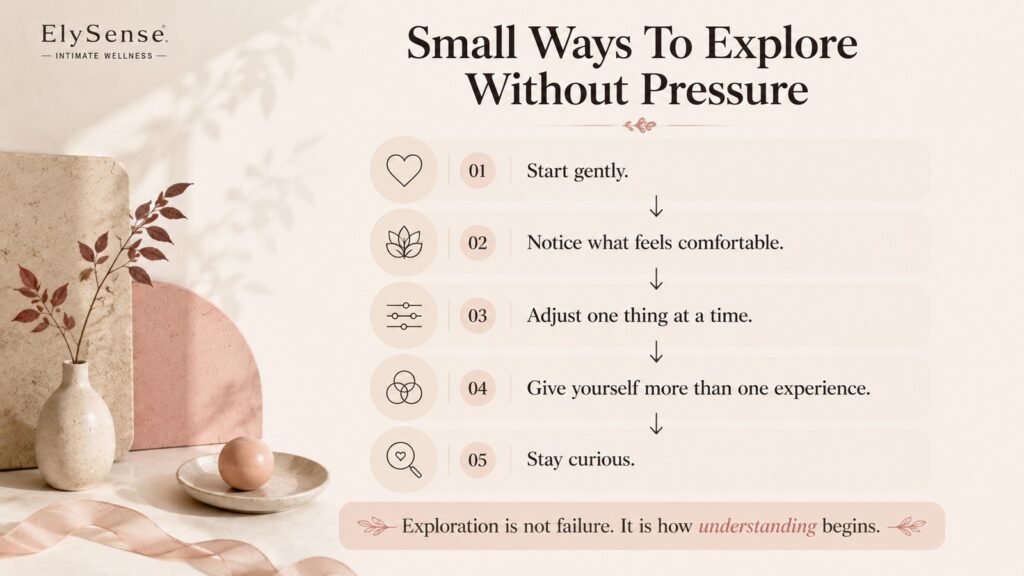
You do not need a long list of advanced techniques.
A few small adjustments can give you clearer information without turning exploration into another performance task.
Start More Gently
Beginning with a lower setting or less direct contact can give your body time to notice the sensation.
You can always increase intensity later.
Starting strong may make it harder to distinguish between:
- pleasantly stimulating;
- distracting;
- overwhelming;
- temporarily numbing.
Gentle does not mean ineffective.
It means giving yourself room to notice.
Reduce the Pressure to Get a Result
Try changing the goal from:
I need to make something happen.
to:
I am noticing what feels comfortable.
This does not guarantee a particular outcome.
It simply creates more space for curiosity.
You might notice that you prefer:
- more distance;
- less pressure;
- a different position;
- slower changes;
- shorter sessions;
- stimulation combined with another kind of touch.
Those observations are the real beginning of understanding your body.
Adjust One Thing at a Time
When everything changes at once, it can be difficult to tell what actually helped.
You might first change only:
- the intensity;
- the angle;
- the amount of pressure;
- your body position;
- how directly the vibrator touches you.
Small adjustments make your body’s feedback easier to understand.
Give Yourself More Than One Experience
One attempt may not tell you very much.
The first experience can be affected by:
- nervousness;
- high expectations;
- unfamiliar controls;
- difficulty relaxing;
- uncertainty about what to do next.
You do not need to keep trying when you are uncomfortable. But you also do not have to reach a final conclusion after one confusing experience.
Our guide How Often Should You Use a Vibrator? explains how frequency, comfort, and breaks can fit into healthy exploration.
Let Curiosity Guide the Process
Curiosity sounds like:
- Was that too strong or simply unfamiliar?
- Did I prefer indirect contact?
- Did changing position help?
- Was I comfortable enough to pay attention?
- Do I want to try that again?
Self-criticism sounds like:
- Why can’t I do this correctly?
- What is wrong with me?
- Why am I not responding like everyone else?
Both reactions are understandable.
But curiosity gives you information.
Self-criticism usually gives you pressure.
Signs You Are Learning Your Body
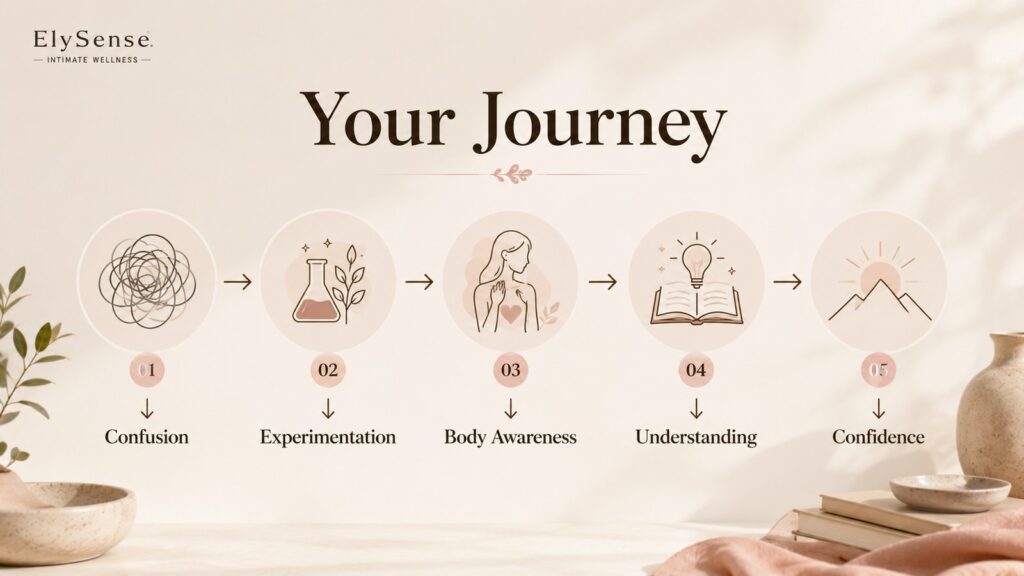
Progress is not limited to orgasm.
You are learning when:
- you recognize a sensation that feels too strong;
- you can tell the difference between “not enough” and “not enjoyable”;
- you notice which positions feel more natural;
- you understand when you need more time;
- you become more comfortable stopping;
- you can describe what you prefer;
- you feel less pressure to copy someone else’s experience.
Learning what you do not enjoy is also part of learning your body.
So is recognizing:
I am not interested in this today.
I would prefer something gentler.
I like this sensation, even if it does not lead anywhere.
This product may not suit me.
These are not failed outcomes.
They are signs of growing body awareness.
When It May Be About the Toy
Sometimes changing your approach helps.
Sometimes the vibrator itself may simply not be a good match.
That possibility may be worth considering when:
- the lowest setting still feels too intense;
- every setting feels sharp or distracting;
- the shape is difficult to position comfortably;
- the controls interrupt the experience;
- the vibration consistently feels too weak;
- repeated attempts produce the same uncomfortable result.
This does not necessarily mean the product is poor quality.
It may simply create a style of stimulation that does not suit your preferences.
Sometimes you are not using it wrong.
Sometimes it is not the right match for your body.
Our guide to Best Vibrators for Beginners explains how different product features can create very different experiences.
When to Pause and Talk With a Healthcare Professional
Not having an orgasm, needing time to explore, or disliking a particular sensation does not by itself suggest that something is medically wrong.
However, it is sensible to stop using the vibrator and seek professional advice if you experience:
- persistent pain;
- burning that does not settle;
- bleeding;
- worsening discomfort;
- an unusual change in sensation that continues;
- any symptom that concerns you.
You do not need to wait until a symptom becomes severe before asking a qualified healthcare professional.
The ElySense Perspective
The goal is not to perform a technique perfectly.
The goal is to understand how your own body responds.
Every adjustment gives you information.
Every preference you notice is progress.
You are not failing the experience.
You are learning from it.
One Big Idea
Your body is not grading your technique. It is giving you information.
Reader Takeaway
You probably are not using your vibrator “wrong.”
You may simply be in the normal process of learning what feels comfortable, what does not, and what your body responds to.
There is no prize for copying someone else’s technique perfectly.
The confidence comes from understanding your own experience.
Frequently Asked Questions
How do I know if I am using my vibrator correctly?
A useful starting point is whether the experience feels safe, comfortable, and under your control. There is usually no single placement, intensity, or technique that works for everyone. Your body’s response matters more than following someone else’s instructions exactly.
Is it normal if I do not orgasm the first time?
Yes. A first experience may feel unfamiliar, ordinary, confusing, pleasant, or not especially enjoyable. Not reaching orgasm does not mean that you failed or used the vibrator incorrectly.
How long does it take to figure out what works?
There is no fixed timeline. Some people recognize their preferences quickly, while others learn through several different experiences. You are allowed to explore slowly and stop whenever something feels uncomfortable.
Should I try a different vibrator?
Possibly, especially when the intensity range, vibration style, shape, or controls consistently feel unsuitable. But you do not necessarily need to buy something new after one imperfect experience. First consider whether small changes in position, pressure, or expectations make a difference.
Can I be doing everything “right” and still not enjoy it?
Yes. A technique can be safe and commonly recommended without being enjoyable for your body. Not liking a particular sensation does not mean you are doing something wrong.
Continue Your Journey
Still wondering why the experience feels different?
Explore: Why Doesn’t My Vibrator Feel Good?
Curious about comfortable and healthy use?
Explore: How Often Should You Use a Vibrator?
Wondering whether the toy itself may be the issue?
Explore: Best Vibrators for Beginners




[…] good yet is not the same as doing something wrong. If technique has become your main question, Am I Using My Vibrator Wrong? explores that concern without treating the experience as a […]