
Why a vibrator may feel weak, too intense, or different from what you expected—and what that can help you notice.
Introduction
You finally bought a vibrator.
Maybe you read glowing reviews. Maybe friends or people online described it as effortless, exciting, or completely different from anything they had felt before.
So you expected something obvious to happen.
But instead, it did not feel very strong. Or you could feel the vibration, but it did not feel pleasurable. Or it felt too intense, strange, or briefly pleasant and then suddenly not.
And almost immediately, the questions began:
Am I using it wrong?
Why does everyone else seem to enjoy this?
Is something wrong with me?
That gap between what you expected and what you actually experienced can feel surprisingly personal. But “not strong enough” describes an experience; it does not yet explain why the experience feels that way.
A vibrator not feeling good does not automatically mean there is something wrong with your body. Sometimes your experience is simply giving you information—about intensity, vibration character, contact, pressure, placement, expectations, or what your body may prefer.
Quick Take
A different experience does not automatically mean something is wrong with you.
Vibrators do not feel good to everyone in the same way, and even the same person may respond differently depending on the toy, setting, vibration character, contact, mood, pressure, or situation.
The goal is not to force the “right” reaction or find the strongest possible sensation. It is to describe what you notice before deciding what it means.
Quick Answer
A vibrator that does not feel strong enough does not automatically mean your body is numb, damaged, desensitized, or incapable of pleasure. Strength is not the same as pleasure: the toy and setting, vibration character, contact, placement, pressure, context, and personal preference can all shape what you feel. If the device seems weaker than it normally does, check its charge level or battery status, selected mode, and manufacturer instructions. Persistent pain, unexplained numbness, injury, or a sudden significant change in sensation is a different concern and deserves professional guidance.
What Are You Really Worried About?
I’m Afraid Something Is Wrong With Me
When other people describe vibrators as life-changing, feeling very little can be confusing.
You may start comparing your body with experiences you have read online and wonder why yours seems different.
But bodies do not respond according to product reviews. A weak-feeling or disappointing experience is not, by itself, evidence of reduced sensitivity or a medical problem.
Your experience does not have to match anyone else’s to be real.
I’m Afraid I’m Using It Wrong
It is easy to assume there must be one correct technique that everyone else somehow understands.
In reality, there is no universal setting, placement, pressure, or pace that works for every person. These factors can change the experience without making any one approach the required one.
Not knowing what feels good yet is not the same as doing something wrong. If technique has become your main question, Am I Using My Vibrator Wrong? explores that concern without treating the experience as a test.
I’m Worried I’ll Never Enjoy It
One disappointing experience can quickly begin to feel like a permanent conclusion.
But one toy, one setting, or one moment cannot tell you everything about your body.
Sometimes learning what does not feel right is part of discovering what does.
Why Doesn’t It Feel the Way You Expected?
Expectation Versus Reality
Many people encounter vibrators first through enthusiastic reviews, recommendations, or stories about immediate pleasure.
Those stories can quietly create expectations:
- The sensation should feel amazing right away.
- The correct reaction should be obvious.
- A vibrator should make pleasure easier.
- Stronger sensation should feel better.
- If nothing happens, the user must be the problem.
Real experiences are often much less predictable.
Something unfamiliar may take time to understand. A strong sensation may feel distracting rather than pleasurable. A highly recommended toy may simply not match what your body prefers.
The difference between expectation and reality is not evidence of failure.
Why We Immediately Blame Ourselves
When a product is widely praised, it can feel easier to question yourself than the product, the situation, or the expectation.
You may think:
Everyone says this works. Why doesn’t it work for me?
But popularity does not create universal compatibility.
A vibrator is one type of stimulation—not a test your body has to pass.
What Does “Not Strong Enough” Actually Mean?
Before deciding that you need more power—or that something is wrong—try separating the parts of the experience.
Intensity
Intensity is how strong the stimulation feels to you in that moment. A higher setting may increase intensity, but maximum intensity is not the goal and does not guarantee pleasure.
Vibration Quality or Character
Vibration character describes how the sensation feels: for example, sharper, buzzier, deeper, broader, steadier, or more pulsed. These are descriptions, not universal rankings. Two sensations can seem similarly intense and still feel very different.
Contact, Placement, and Pressure
Contact is how broadly or narrowly the vibration reaches you. Placement is where you feel it, and pressure is how firmly the vibrator meets the body. Changing any of these can change how noticeable the vibration feels, but there is no single correct combination.
Experienced Pleasure
Pleasure is your response to the experience, not a measurement of motor power. A vibrator can feel strong without feeling pleasurable, and a subtler sensation can still feel good.
Device Performance
Sometimes “weak” is about the device rather than body response or fit. If it feels weaker than its own usual operation, check whether it is fully charged or whether its replaceable batteries need attention, confirm the selected mode, and follow its manufacturer instructions. That is different from a device working normally but producing a sensation that does not suit you.
These distinctions are clues, not diagnoses. Describing the mismatch first can help you decide what—if anything—you want to change.
What Your Experience Might Be Telling You
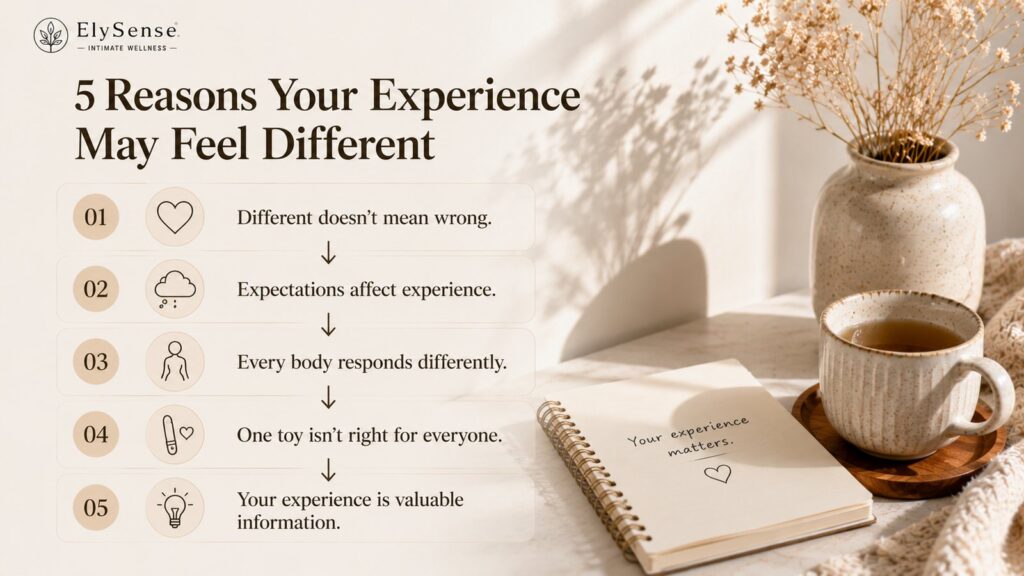
Your reaction may offer useful clues, but it should not be treated as a definite explanation.
If It Feels Too Intense
Too much intensity may mean that:
- the setting feels stronger than you prefer;
- the stimulation is too direct;
- the pressure is uncomfortable;
- your body needs more time to adjust;
- or that particular vibration character is not a good match.
Strong sensation is not automatically better sensation.
Why Doesn’t My Vibrator Feel Strong Enough?
First describe what “not strong enough” means in your experience. Is the vibration difficult to notice? Is it noticeable but not pleasurable? Does it feel broad when you prefer more focused contact, or sharp when you expected something deeper? Does the device itself seem weaker than it normally does?
The sensation may feel too mild, too indirect, or poorly matched to where and how you notice stimulation. Contact, placement, pressure, distraction, fatigue, and the pressure to react may also affect what you notice. None of these possibilities can be confirmed from a weak-feeling experience alone.
Feeling very little in one moment does not prove numbness, desensitization, nerve damage, dysfunction, or anything about your overall capacity for pleasure. More power is also not the only possible response; first identifying the mismatch gives you better information.
If It Feels Strange or Uncomfortable
New sensations can feel unfamiliar, and unfamiliarity alone does not tell you whether they will become pleasurable.
But unfamiliarity does not mean you need to push through discomfort.
Your reaction may be telling you that you prefer a different pace, pressure, placement, or type of touch.
Discomfort is information—not a challenge you need to overcome.
If It Feels Good Briefly and Then Stops
Sensation can shift quickly.
What initially feels pleasant may become overwhelming, repetitive, distracting, or less noticeable over time.
This does not necessarily mean anything has gone wrong.
Bodies respond dynamically, and preferences can change even within the same experience.
What Usually Helps
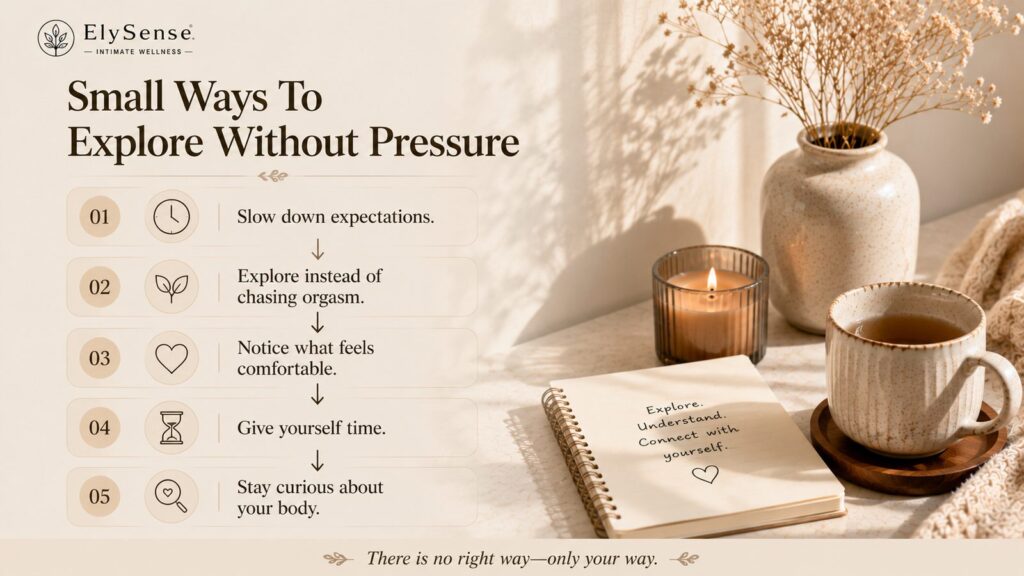
The goal is not to make your body produce a particular result. It is to create enough space to notice what your body actually responds to.
Slow Down the Expectations
Try not to treat the experience as a test.
You do not need to prove that the toy works or that your body responds correctly.
Reducing that pressure may make it easier to notice smaller, subtler sensations.
Explore Instead of Chasing an Orgasm
When orgasm becomes the only measure of success, every other sensation can feel unimportant.
Exploration allows you to notice:
- what feels comfortable;
- what feels too strong or too weak;
- what makes you tense;
- what helps you relax;
- and what you may want more or less of.
Pleasure can be information before it becomes an outcome.
Notice What Your Body Responds To
You might notice that your body prefers:
- gentler sensations;
- less direct contact;
- slower changes;
- broader or more focused contact;
- more pressure;
- less pressure;
- or a completely different type of touch.
There is no correct preference.
Give Yourself Time
Some people understand a new sensation immediately.
Others need repeated, pressure-free experiences before they know how they feel about it.
There is no deadline for learning your body. If your question eventually becomes whether this entire kind of stimulation suits you—not why this experience felt disappointing—Is It Normal Not to Like Vibrators? takes up that separate question.
Can the Vibrator Itself Be the Mismatch?
Not every vibrator suits every person.
Different designs can create different:
- vibration patterns or sensory qualities;
- intensity ranges;
- pressure;
- contact areas;
- and overall experiences.
A device may be operating normally and still produce a sensation that is not a good fit for you. A stronger or more expensive vibrator is not automatically a better match.
If the device is unusually weak compared with its normal performance, checking the charge or battery, mode, and manufacturer guidance may help distinguish a practical device issue from a fit issue.
This article is not asking you to buy another product immediately. First understanding whether the mismatch involves intensity, vibration character, contact, comfort, or preference can make any later decision more deliberate. If you eventually want to compare beginner-oriented designs by fit rather than power alone, Best Vibrators for Beginners is the more relevant next step.
Sometimes it is not you.
Sometimes it is not that the toy is bad.
Sometimes it is simply not the right match.
When to Pause and Talk to a Healthcare Professional
A vibrator not feeling strong or pleasurable is not, by itself, a medical symptom or evidence of lost sensitivity.
Professional guidance may be helpful if you experience:
- persistent or recurrent numbness;
- continuing pain;
- a sudden or significant change in sensation that you cannot explain;
- irritation or injury;
- or symptoms that continue to worry you.
A healthcare professional can help consider possible factors without assuming the vibrator is the only explanation.
Seeking support can help clarify a concern that general information cannot resolve and give your symptoms the attention they deserve.
If your concern is specifically persistent or recurrent numbness—not simply that the vibration feels weak—read Can Vibrators Cause Numbness? for that separate question.
ElySense Perspective
The goal is not to have the “right” experience.
The goal is to understand your own experience.
Every body learns differently.
Some sensations feel good immediately. Others feel unfamiliar, overwhelming, subtle, or simply uninteresting.
Your experience is information.
It is not evidence that something is wrong with you.
FAQ
Is it normal if my vibrator doesn’t feel good?
Yes. Not everyone enjoys the same sensations, and one toy or experience does not define your body. It may help to distinguish whether the mismatch involves intensity, vibration character, contact, expectations, or preference before drawing a conclusion.
Why doesn’t my vibrator feel strong enough?
It may feel mild because of the device or setting, vibration character, contact, placement, pressure, context, or personal preference. If it is weaker than its own normal operation, check the charge level or battery status, mode, and manufacturer instructions. A weak-feeling experience alone does not prove reduced sensitivity or mean that a stronger vibrator will feel better.
Why can I feel vibration but not pleasure?
Noticing vibration and experiencing pleasure are not the same thing. A sensation can be clear or intense without matching the kind of contact, pressure, vibration character, or context that feels good to you.
Why does my vibrator feel too intense?
The setting, pressure, placement, contact area, or vibration character may feel stronger or more direct than you prefer. You do not need to tolerate discomfort to make the experience count.
Am I using it wrong?
Not necessarily. There is no single technique that works for everyone. If placement, settings, or technique are your main concern, the dedicated guide Am I Using My Vibrator Wrong? can take you further without turning this article into a tutorial.
Should I buy another vibrator?
Not immediately. First consider what felt uncomfortable, absent, or mismatched and whether the device is operating as expected. A different product may create a different experience, but stronger or more expensive does not automatically mean better for you.
One Big Idea
“Not strong enough” describes the sensation. It does not diagnose your body—and stronger does not automatically mean more pleasurable.
Continue Your Journey
If your main question is technique
Explore: Am I Using My Vibrator Wrong?
If you are wondering whether you like this kind of stimulation at all
Explore: Is It Normal Not to Like Vibrators?
If persistent or recurrent numbness is the actual concern
Explore: Can Vibrators Cause Numbness?
Reader Takeaway
Maybe nothing is wrong with you.
Maybe “not strong enough” is the beginning of a more useful description: too mild, too indirect, the wrong vibration character, noticeable but not pleasurable, or simply not the right fit.
You do not have to turn that observation into a diagnosis or solve it by chasing more power.
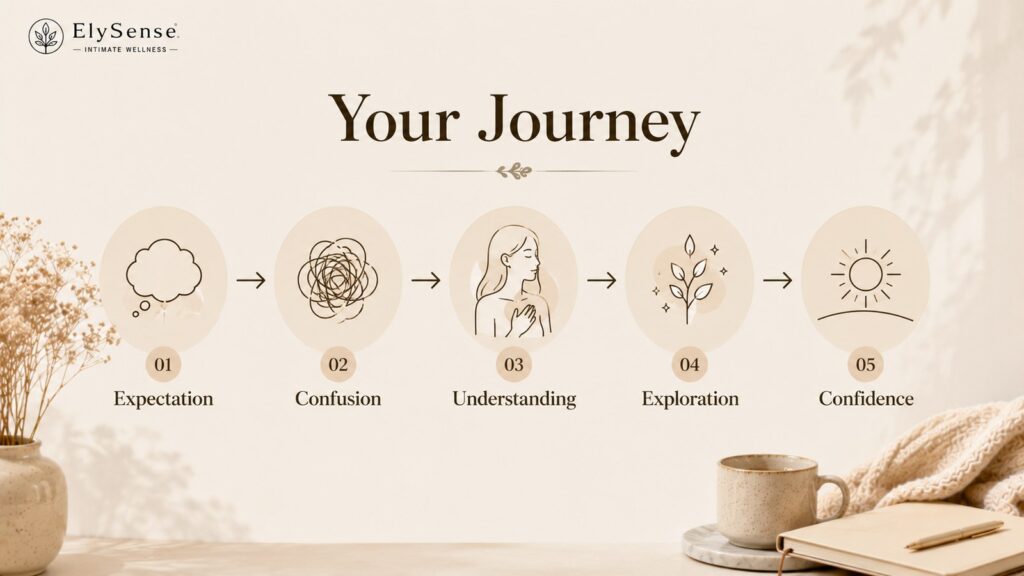
Understanding the mismatch is not failure. It is the beginning of confidence.