

Maybe you have been using your vibrator more often lately—every day, a few times a week, or sometimes more than once a day—and a question has quietly appeared:
Has this become too much?
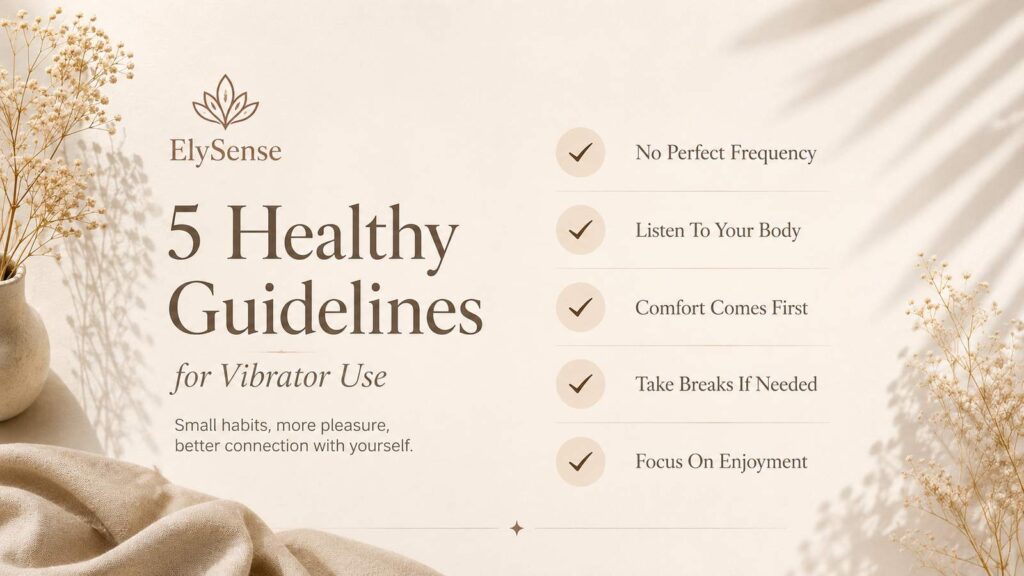
There is no universal number of times per week that you should use a vibrator, and everyday use is not automatically a problem. What matters more is whether the experience remains comfortable and chosen: whether you notice soreness or irritation, whether temporary sensitivity changes settle, whether your body has time to recover, and whether the routine stays flexible and fits comfortably into your life.
You do not need to measure yourself against someone else’s schedule. But persistent pain, visible injury, or numbness that continues or appears without vibrator use deserves professional guidance rather than a stricter self-imposed frequency rule.
Quick Answer
How often you use a vibrator is a personal preference, not a required weekly target. Using one every day may be comfortable for some people, but no single frequency is automatically right or safe for everyone.
Your current routine may be working well when it remains enjoyable, physically comfortable, easy to adjust, and does not interfere with daily life. It may be time to slow down, pause, or change something when you notice:
- soreness, irritation, or pain;
- temporary numbness that does not settle with recovery time;
- discomfort replacing enjoyment;
- pressure to keep increasing the intensity;
- anxiety about stopping or changing your routine;
- interference with sleep, responsibilities, relationships, or intimacy.
Instead of asking only, “How many times is too many?” try asking:
How do I feel before, during, and after?
Is There a Normal Frequency?
Not really.
Some people use a vibrator occasionally. Some use one several times a week. Others may use one every day.
All of those patterns may be comfortable for an individual, but the number alone cannot tell you whether a routine is working well.
Your interest may also change. Stress, privacy, energy, relationships, hormones, curiosity, and simple preference can all affect how often you want to use it.
Two people could use a vibrator equally often and have completely different experiences.
One may feel relaxed and comfortable.
The other may feel sore, pressured, or worried.
That is why comparing numbers rarely gives you the answer you are looking for.
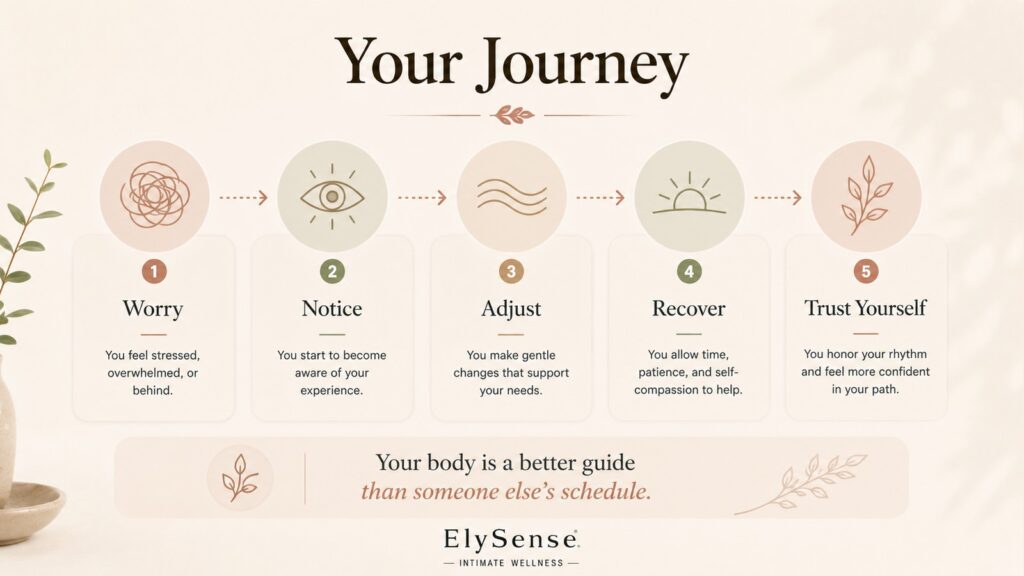
Your body is a better guide than someone else’s schedule.
What Matters More Than the Number
A simple way to check your routine is to look at four things.
Comfort
Does it still feel good?
Temporary intensity is one thing. Ongoing soreness, burning, irritation, or pain is another.
Your body should not have to tolerate discomfort just because you want to continue.
Recovery
Do you return to your usual level of comfort and sensitivity afterward?
A temporary change in sensation can happen after strong or prolonged stimulation. The more useful question is whether it settles rather than continuing or getting worse.
Choice
Does using your vibrator still feel like something you want to do?
A familiar habit is not automatically a problem.
But it is worth noticing whether the habit feels chosen or pressured.
You should be able to pause, change the setting, or decide not to use it without feeling that something is wrong.
Impact
Is the routine fitting into your life comfortably?
Enjoying a vibrator is not unhealthy simply because you enjoy it often.
Concern becomes more relevant when it regularly affects sleep, responsibilities, relationships, intimacy, or emotional wellbeing.
Which Situation Sounds Most Like You?
Sometimes the question “Am I using it too much?” is really several different questions.
“I use it often, but I feel completely fine.”
You may not need to change anything.
If the experience remains comfortable, flexible, and enjoyable, frequency alone is not a reason to assume there is a problem.
Different does not automatically mean unhealthy.
“I feel less sensitive immediately afterward.”
Your body may simply need a little recovery time.
Try lowering the intensity, using less pressure, shortening the session, or changing where you place the vibrator.
Temporary sensitivity changes do not automatically mean permanent harm.
“I keep reaching for stronger settings.”
Your body may have become familiar with one repeated sensation.
That does not mean you have damaged yourself.
You might experiment with a lower setting, different placement, or a short pause and notice what changes.
“I feel like only one kind of stimulation works.”
Having a strong preference is not the same as being dependent.
Many people respond more easily to certain sensations.
The useful question is whether you want more flexibility for yourself—not whether you match someone else’s expectations.
“I feel worried, pressured, or out of control.”
This deserves attention even when there is no physical discomfort.
The issue may not be the number of times you use a vibrator. It may be the anxiety or pressure surrounding it.
That is not a reason for shame.
It is a reason to slow down and understand what the habit is doing for you.
Signs You May Want to Adjust or Pause
Taking a break does not mean you have done something wrong.
It simply means your body may be asking for a different pace.
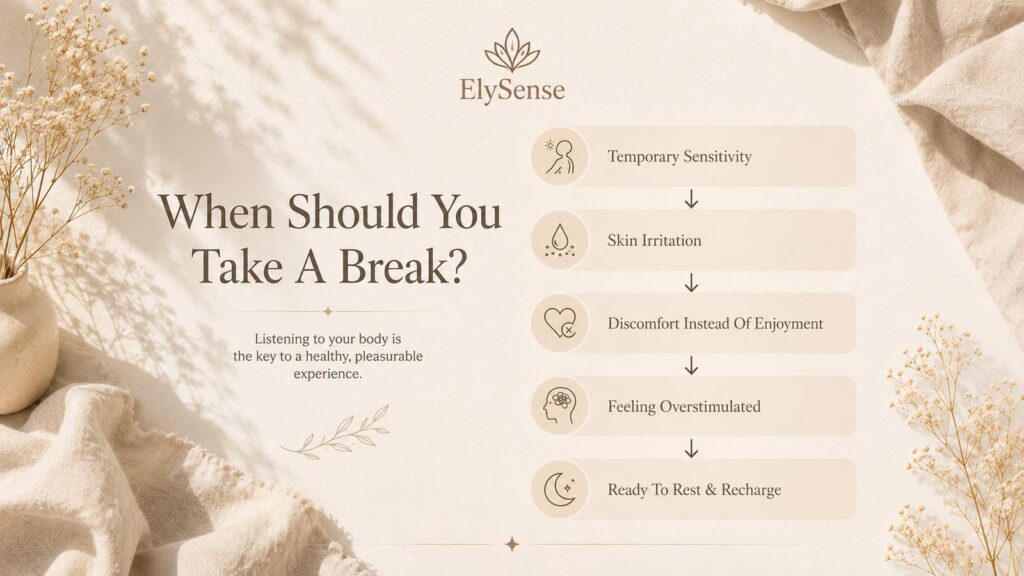
You may want to pause or adjust if you notice:
- soreness that lasts after use;
- irritation, burning, or chafing;
- numbness that keeps returning;
- pain during or after stimulation;
- discomfort starting to replace enjoyment;
- a need to keep increasing the intensity;
- anxiety when you try to slow down or change your routine.
Sometimes a small adjustment is enough.
Other times, a short break can help you notice what your body actually wants.
Rest is not failure. It is part of learning.
Small Ways to Adjust
Regular use also makes simple cleaning habits more important. See How to Clean Your Vibrator Safely for a beginner-friendly routine.
You do not have to stop completely just because something feels slightly off.
Start with one small change.
Lower the intensity
Try beginning on a gentler setting and staying there a little longer.
More intensity does not always create more pleasure.
Use less pressure
Sometimes pressure against the body matters as much as the vibration itself.
A lighter touch may feel more comfortable and help you notice a wider range of sensation.
Shorten the session
If longer sessions leave you sore or numb, try stopping earlier.
You do not have to keep going until your body feels overwhelmed.
Change the placement
Instead of holding the vibrator in exactly the same place, try moving it slightly or using it nearby rather than directly on the most sensitive area.
Small changes can feel very different.
Take a short break
A few hours or a few days may be enough, depending on how you feel.
There is no perfect recovery schedule.
Wait until your body feels comfortable again.
Change one thing at a time. That makes it easier to understand what actually helps.
What About Sensitivity?
Strong or prolonged stimulation can sometimes leave you feeling temporarily less sensitive. That can be unsettling, but it does not automatically mean you have caused permanent harm.
Lowering the setting or pressure, changing placement, shortening the session, or taking a brief break may give your body time to return to its usual sensation.
If numbness continues, becomes frequent, or appears even when you have not used a vibrator, speak with a healthcare professional. For a fuller explanation, read Can Vibrators Cause Numbness?.
What About Dependence?
Using a vibrator often is not the same as being dependent on it. You may simply prefer a sensation that feels reliable, familiar, or easier for your body to respond to.
It may be worth looking more closely when the habit feels less like a choice, you become anxious about changing it, or it affects intimacy in a way that bothers you.
The most useful question is not:
“Do I use it too often?”
It is:
Do I still feel free to choose, adjust, pause, and explore?
For a deeper discussion of preference, habit, and loss of choice, read Can You Become Too Dependent on a Vibrator?.
When It May Help to Talk With a Professional
Most concerns about frequency can be approached by slowing down, noticing your body, and making small adjustments.
But some signs deserve more attention.
Consider speaking with a healthcare professional if you experience:
- pain or irritation that does not improve;
- numbness that does not go away;
- bleeding, visible injury, or significant swelling;
- changes in sensation even when you have not used a vibrator;
- distress or a strong sense that the behavior is no longer under your control.
These signs do not automatically mean something serious is wrong.
They simply deserve more than repeated self-testing.
Frequently Asked Questions
How often should I use a vibrator?
There is no required number of times per week. Use comfort, recovery, choice, flexibility, and the routine’s effect on your life as guides rather than trying to meet a universal target.
Is it okay to use a vibrator every day?
Everyday use is not automatically a problem, and it may be comfortable for some people. Adjust or pause if you develop soreness, irritation, pain, recurring numbness, or a routine that no longer feels flexible or chosen.
Is it bad to use a vibrator every day?
The daily schedule alone does not make vibrator use bad. How your body responds and whether the routine still works for you are more useful signals. Persistent pain, injury, or ongoing unexplained numbness should be discussed with a healthcare professional.
How often can you use a sex toy?
There is no single frequency rule for every sex toy or every person. Follow the product’s care and use instructions, keep shared or body-inserted toys hygienic, and pay attention to comfort, recovery, and any effect on daily life.
Final Thought
There is no perfect number of times you should use a vibrator.
A routine that works for you is one that still feels comfortable, flexible, and chosen.
You do not need to copy someone else’s habits.
You do not need to prove that your body should respond in a particular way.
And you do not need to blame yourself when something feels different.
Your experience is information.
A comfortable routine is not built by following someone else’s rules. It is built by learning to trust your own experience.
Continue Your Journey
If you are worried about numbness
Learn why temporary sensitivity changes may happen and when it makes sense to seek help.
If you are worried about dependence
Can You Become Too Dependent on a Vibrator?
Understand the difference between preference, habit, pressure, and loss of choice.
If you want better cleaning habits
How to Clean Your Vibrator Safely
Learn how to clean, store, and care for your vibrator without making the process complicated.
If you are choosing your first vibrator
How to Choose Your First Vibrator
Start with your comfort, needs, and situation before comparing products.
Editorial Note
This article offers general sexual-wellness education and is not a substitute for personal medical care. Persistent pain, numbness, bleeding, visible injury, or significant emotional distress should be discussed with a qualified healthcare professional.